We ARE for Security
Rules on labor protection when working at height establish state regulatory requirements for labor protection and regulate the procedure for the actions of the employer and employee when organizing and conducting work at height.
Not only are these rules very outdated, but very often they are simply ignored by employers and employees. A huge number of fatal accidents are connected with this fact.
- Falls from a height are the main cause of fatal accidents in the construction industry, namely 34%.
The reasons for the high level of injuries and deaths on construction sites are:
- Saving on the means of production: using outdated models of construction equipment
- Incorrect organization of work
- Negligent attitude to safety rules when working at height using construction equipment
- Attracting unskilled personnel to perform work
High – altitude jobs are high-risk jobs. Employees who perform work at altitude are subject to additional occupational safety requirements, including special requirements for training, certification, admission to independent work, instruction on occupational safety and periodic verification of knowledge on occupational safety.
NECESSARILY:
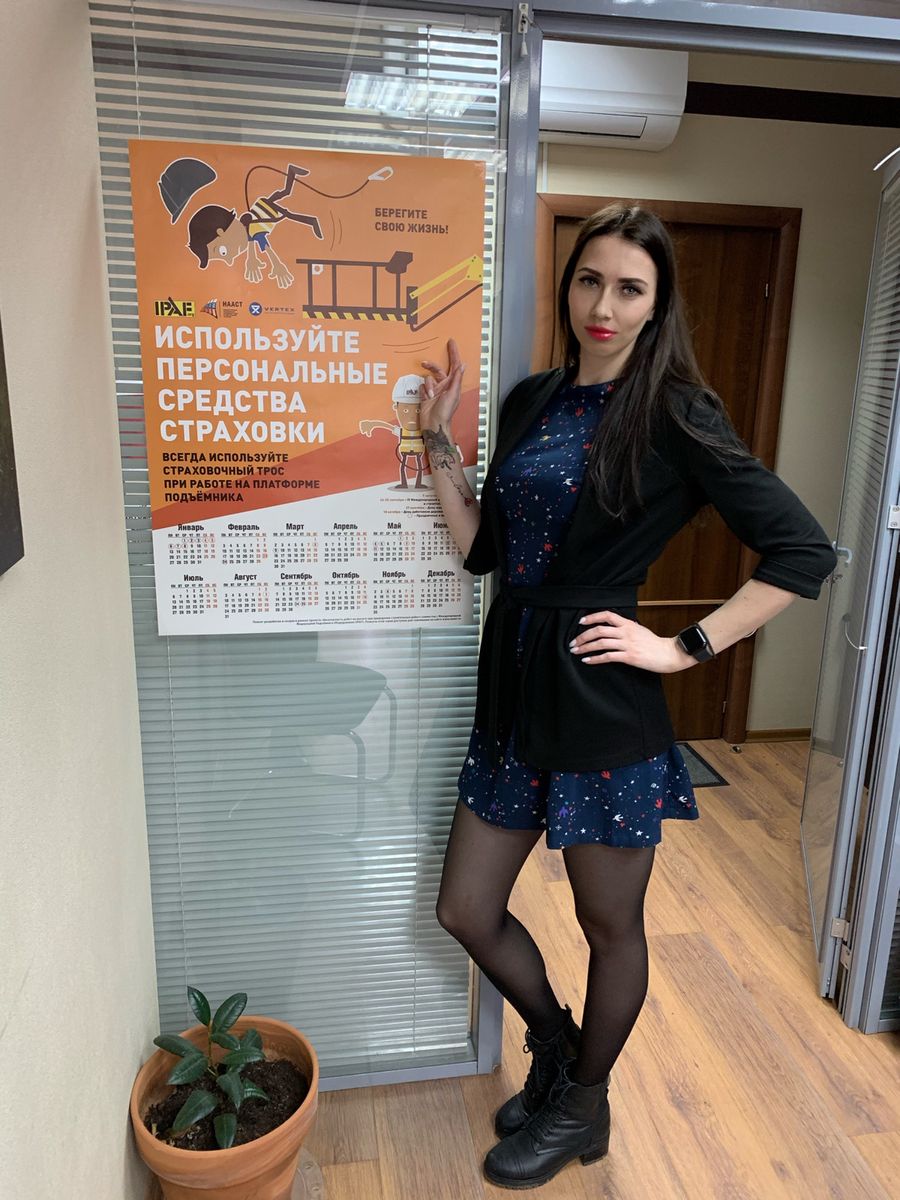
Workers performing work at altitude are required to wear protective helmets with a buttoned chin strap. Before starting work, appropriate safety systems for work at altitude (holding systems, positioning systems, safety systems, rescue and evacuation systems) must be prepared.
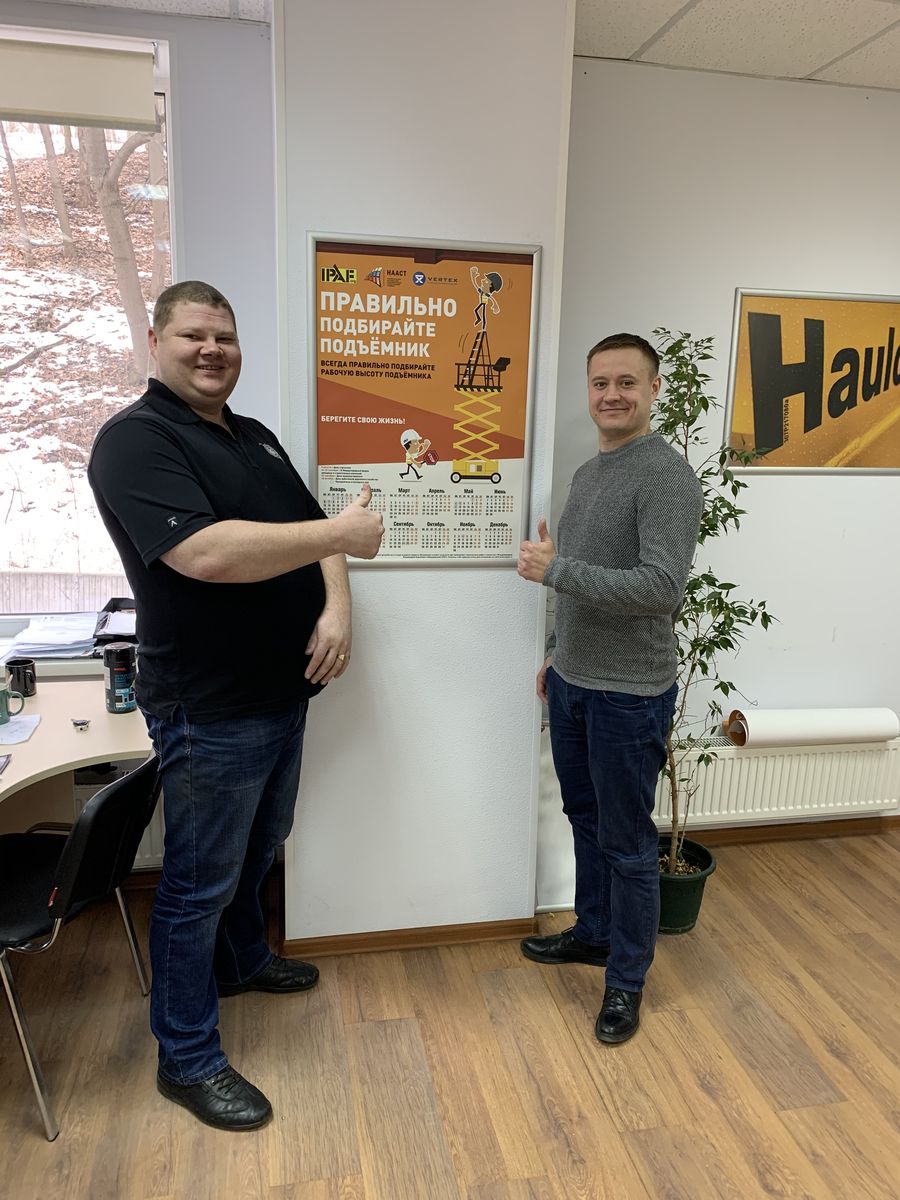
VERTEX LLC, together with the international Federation of lifting equipment (IPAF) and the National Association of Construction Equipment Landlords (NAAST)
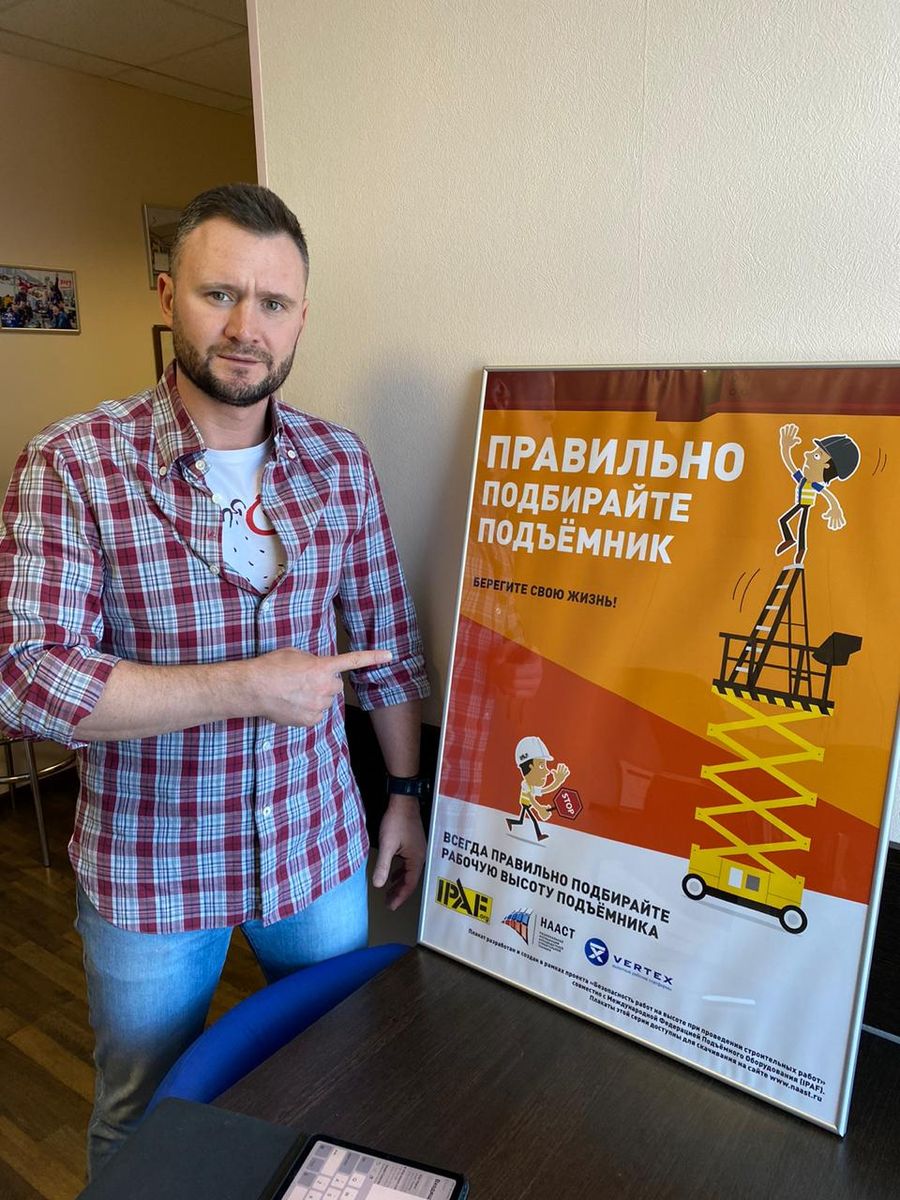
calls on all employees and operators who perform high-altitude work using lifting equipment to REMEMBER the need to conduct a proper risk assessment, select the correct working equipment, conduct a thorough inspection of the object and equipment, and only employ trained and trained operators under proper supervision.
The lifts are specifically designed for safe temporary work at altitude, and have been recognized by safety authorities throughout Europe.
In any case, you can NOT:
- Use the lift for purposes other than delivering people, their equipment and tools to the required location;
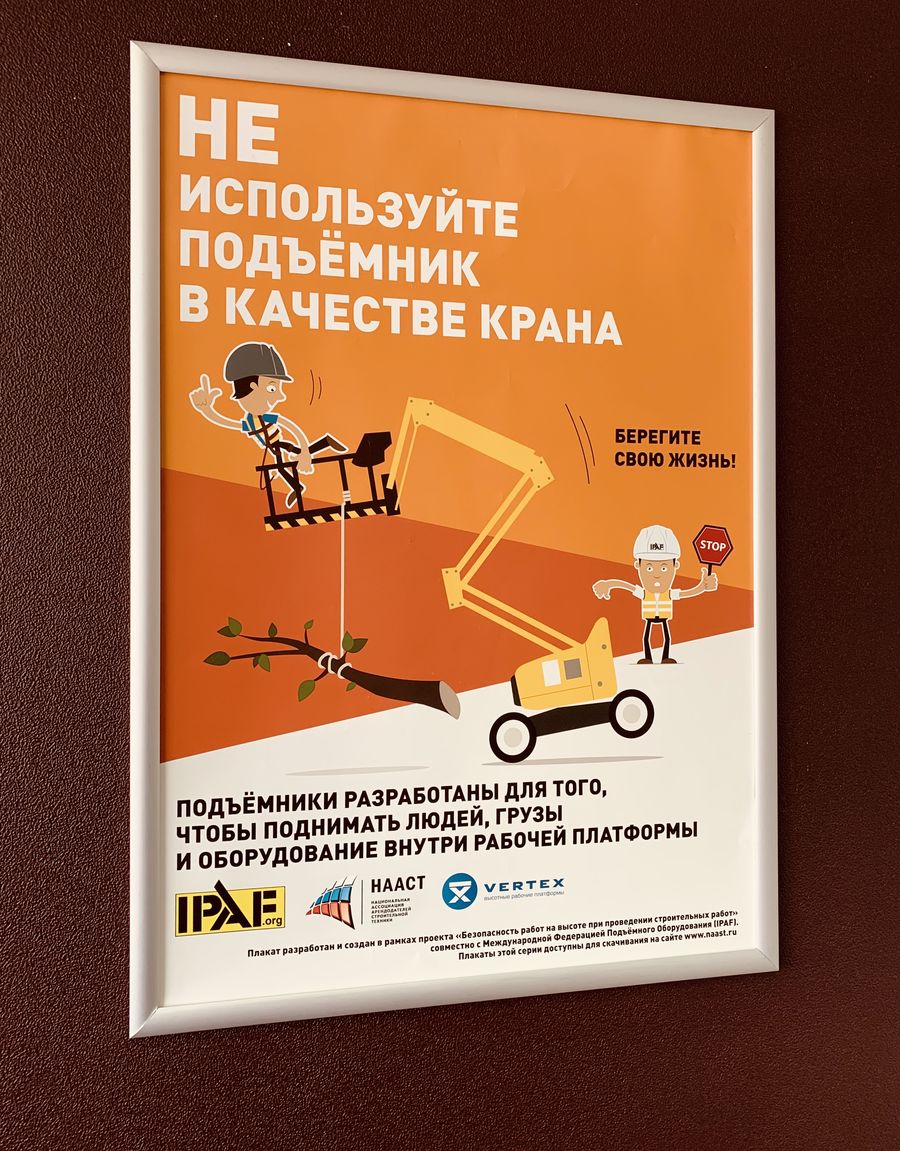
- Use the machine as a crane, freight Elevator or forklift. Use machines only for the intended purpose;
- Suspend loads when lifting or lowering the basket;
- To lean against a boom or a lift to the nearby static or movable structure;
- Use the machine with defects or improper handling maintenance cost. The defective / damaged machine must be removed from the operations;
- Climb the hood of the lift;
- Replace the stabilizing elements of the machine with loads or elements with other characteristic;
- Modify or disable machine components if this may affect the safety or stability of the machine;
- Do not disconnect the protective device.
Do not neglect your safety - after all, the price of this is life!
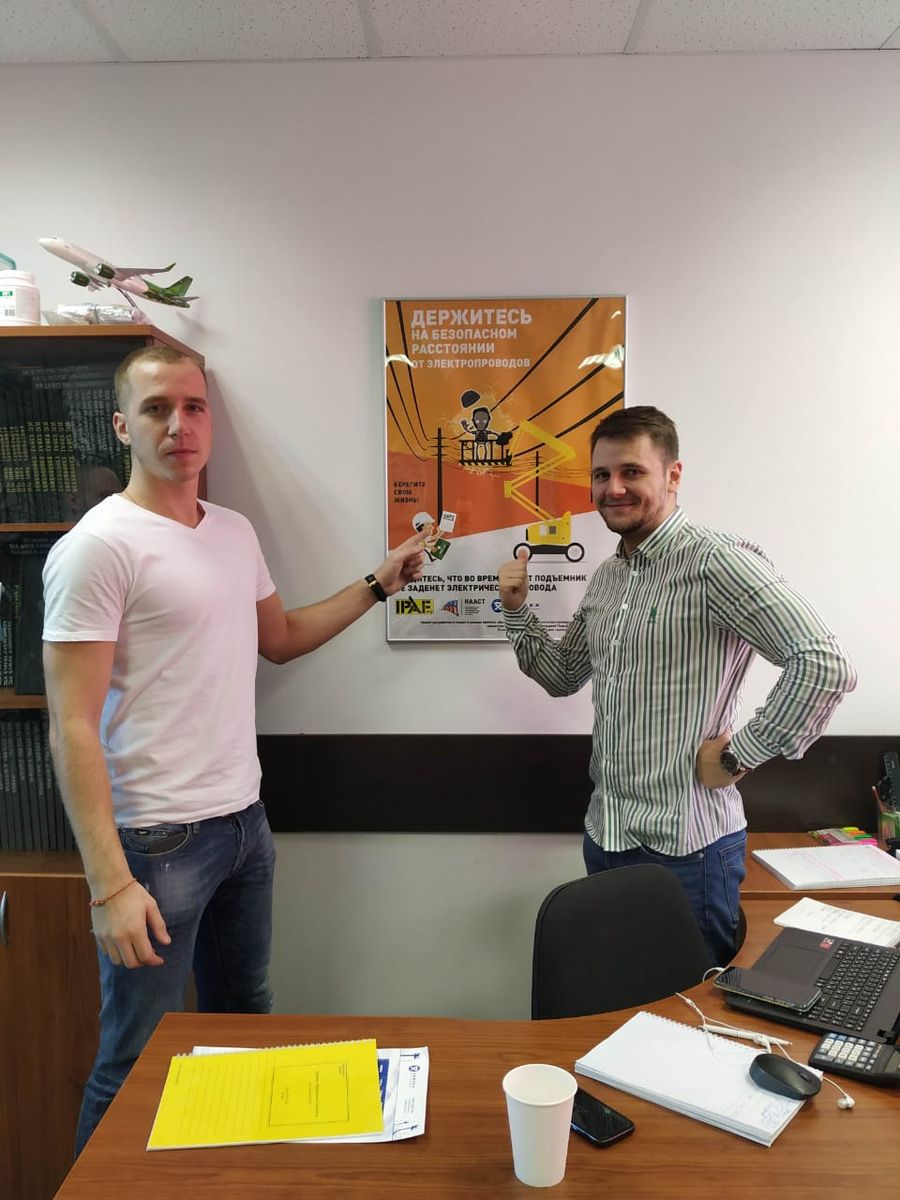
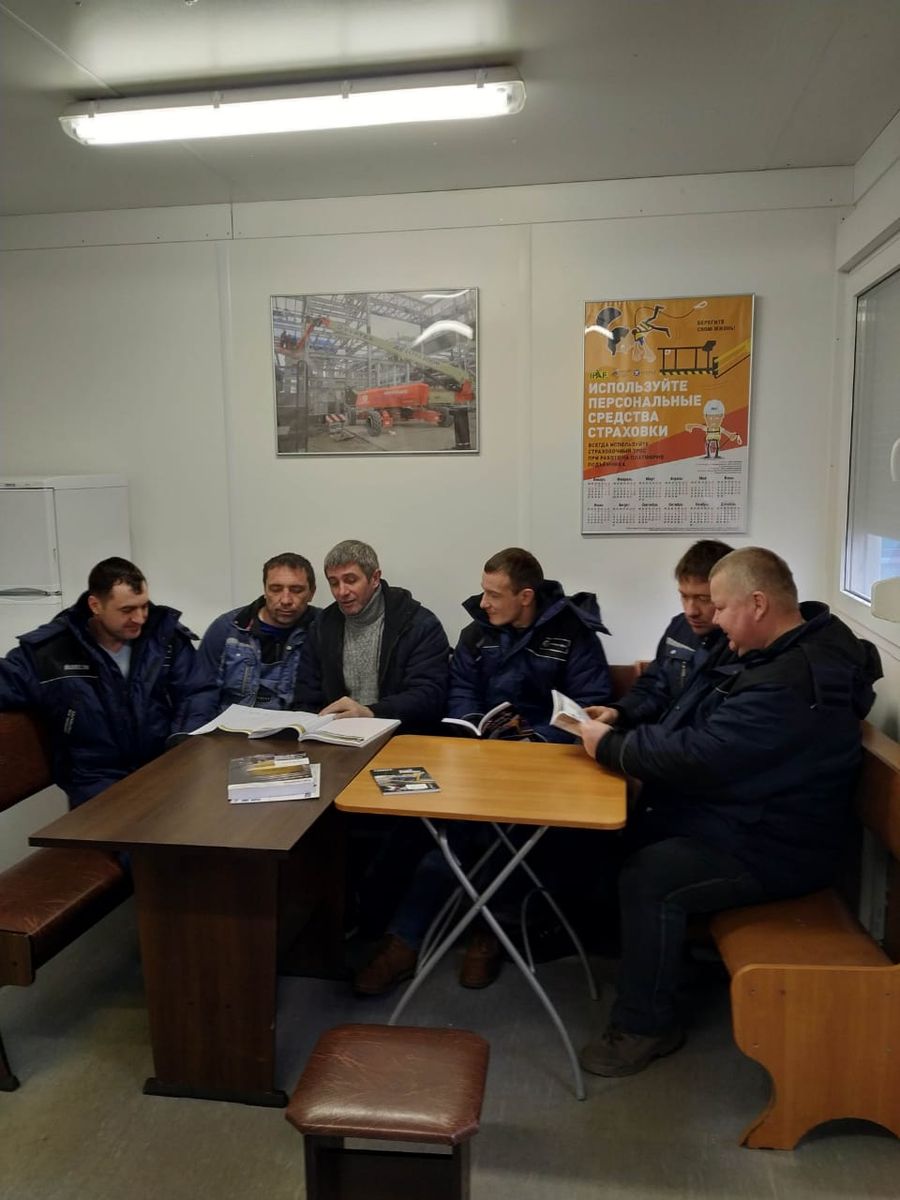
Photo
1/6